About
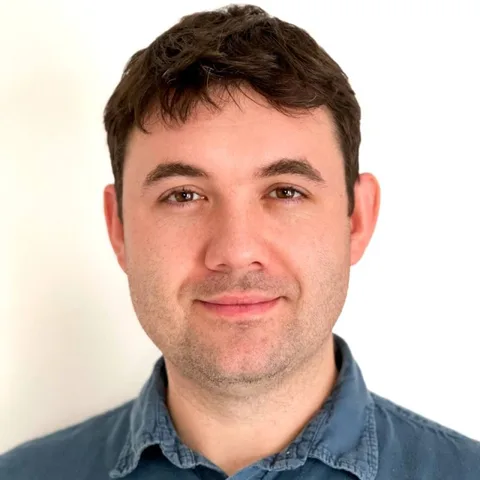
Georg Malahov
I'm an AI engineer and a founder: I build products with a team of agents and take them to market myself. Fifteen years in the profession shaped how I think: in systems, in short iterations, in things that can be taken apart and put back together. For most of those years I built other people's products; now I build and sell my own. This site collects what I publish under my own name.
Inputs
- A wide focus. I started in frontend but didn't stop there: backend, databases, architecture, infrastructure. I want to understand and control every element of a system, not just my own part of it.
- Check first, decide after. All else being equal, I would rather spend an hour on an experiment than an hour on theory: practice always gives the more precise and reliable answer.
- AI is the biggest change in the profession. I take it for a revolution across every field, and in software first of all. Both the architecture of my products and my own workflow are built around it; I'm learning to work with it more effectively.
- Machines do the work, people make the decisions. Any routine that can be automated should be automated: the work speeds up and most of my time goes into higher-level, product decisions.
- I finish what I plan. The public part of that work is collected on this site.
What I'm building, and why
Two threads run through almost everything I do. The first is voice as an interface: I think speaking will soon be more natural than typing, and I build products on that. I work with AI agents by voice myself — that is where the idea of Dictation came from. The second is AI at the core of everything: not just chat and text generation, but autonomous agent systems that both the products and my whole working process rest on.
Since December 2024 those two threads have grown into seventeen projects. Seven of them are running today; four are paid for by clients. The most visible ones:
- Dictation — speak any language and get clean, formatted text, translated if needed.
- Subtitle Editor — subtitles right in the browser, the video never leaves your computer.
- Call Copilot — a call transcribed and summarised afterwards. Paying users have been coming since March 2026, arriving from a search in the Chrome Web Store.
- Vereinswebsite — a turnkey website for an association: news, an events calendar, documents and membership applications, run by the board itself. It grew out of the websites I built for clients and that are still in service; now it is work you can order.
- Speech Journal — the personal voice journal I have kept since December 2024 and the source of the chronicle on the front page.
Every product has its own page; this one is about the person behind them.
From the outside, seventeen projects may look like a lack of focus. In practice there is one idea — turning speech into a finished, useful result — and time after time it has transformed, shedding what it didn't need and getting sharper. Almost every project left behind work and understanding that were used in the next.
How I work
I don't write code line by line: I draw up a plan of work, and AI agents carry it out — once, twelve such plans ran in parallel in a single night — thirty-six hours of autonomous agent work in total. An agent does the review too: it walks the finished screens in a browser and corrects what it finds, leaving me a short list for a final manual check. The agents handle DevOps reasonably well too, so that part is speeding up as well.
My voice notes are turned into a knowledge base automatically: projects, people, decisions, milestones. The chronicle on the front page is assembled from it, and so is the blog — dozens of posts in three languages since December 2024. Not advice, but a chronicle with dates: what I thought at the time, which step I decided to take next, and how I would know it had worked. My role is to check, correct and approve, not to write every text by hand. The rules these texts are proofread against accumulate in a separate document and shape how the next one is produced.
I have a full-time day job, a family and two children — and, alongside them, many tasks running in parallel and carried through to a result. It isn't a matter of hours: alone and by hand, that much cannot be done. Hence the bet on agents: I follow the development of AI tools closely and regularly rebuild my workflow around them.
How I see the profession
I started in frontend and never stayed only there. Backend, databases, system architecture, infrastructure — I learned all of it because the work needed someone able to hold the entire chain at once. A wide focus was always a trait of character. At some point I stopped fighting it and started using it as a strength. Now that a developer has to be a product manager and a marketer as well, a wide profile has turned out to be exactly what is needed.
I try new things early: first in practice, with my own hands — and I draw conclusions only from the results of those experiments and checks. That habit, rather than any single skill, is what has carried me through the last few years. AI and automation develop faster than anyone can earn a formal qualification in them; the only way to hold a well-founded opinion is to use them yourself.
I have always enjoyed automating processes. I came into software partly because it lets one person build systems that scale easily. That same instinct is now changing the value of the profession I grew up in: classical engineering skills are getting cheaper fast. That is common knowledge by now; I simply prefer to admit it and adapt to the new shape of the profession rather than cling to the old order of things — it cannot be held any longer.
I hold one counterweight to all that enthusiasm: the final decision and the responsibility stay with the human. The machine does the work. I decide what gets done, how and why. That is the only way to use these tools without losing yourself.
There is a flip side. When the machine does the work, most of the time goes into decisions — and that is exactly where the human becomes the bottleneck: the speed at which a product develops now runs up against the person who has to decide, check the result and put their signature under it. The temptation to automate that too — to take the human out of the loop — is understandable. In the long run it looks doubtful to me, but for still more speed, the next step is right there.
What I'm learning now
Working alone gives a rare advantage — speed. I get from an idea to a deployed version in an evening, live with the result for a week or two, and drop it if it hasn't proved itself. Most of the products on this site came out of exactly that cycle.
The first attempt to turn voice notes into a product went through an accelerator in 2025. We reached the final but took no prize: ours was the most developed product there, and still we had no answer to the jury's question of who needed it and what for. That made it clear the problem wasn't the code: what decides is marketing, distribution and the ability to explain clearly to your audience which task you solve. In the autumn I went to study marketing. Since then I have been deliberately developing what doesn't come by itself: writing publicly, learning to talk about my work, learning to bring a product to market and not only to production. What is still missing is the last step — a steady source of traffic, so that the product gets found without me. That is what I'm learning now.
The number of projects is not the goal. The goal is useful products that people pay for: to find, among everything built, what genuinely helps people, finds its audience and is worth the money. I'm heading towards a one-man company — a living, profitable business with real customers, real revenue and unit economics that work, scaled through technology and AI agents. As soon as one of the products finds its audience and starts to grow, I'll scale that one — and if that takes people, I'll build a team around it.
Working together
I'm open to:
- Consulting. AI agents in development, content pipelines from voice notes, knowledge bases, content in several languages from a single source. Short formats, from one day.
- Turnkey websites. A website for an association, an initiative or a small organisation: built on a foundation that already works, and run by the client from there on. This is the work I most often take on for clients; price, timeframe and what is already included are on the Vereinswebsite page.
- A partnership in marketing and promotion. This is a new field for me, and I'm ready to team up with a strong specialist to learn from them on live products. From my side: the product, the technology and the speed of development.
- Joint projects in voice and AI. Where the two threads above meet. Worth a conversation if you bring traffic or domain knowledge.
Not on the table: permanent employment, multi-year enterprise rollouts, staff augmentation without an AI component, and frontend-only roles.
Contact
- georg@malahov.io
- A 30-minute call
- GitHub and LinkedIn — though this site remains the main channel.